Job 1: Hairline vertical crack, poured wall, finished basement
Arrived within 2 hours of the call. Homeowner had two inches of water along a fifteen foot stretch of carpet behind a sectional couch. Pulled the baseboard and found a vertical hairline crack running from the sill plate down to about thirty inches above the floor. Efflorescence on the block told me this was not the first time, just the first time it made it past the carpet pad.
Decision: extract, demo the bottom twenty four inches of drywall, pull the pad, save the carpet. The crack itself is a structural conversation, not a restoration one, so I documented it with photos and told the homeowner to call a foundation contractor for epoxy or polyurethane injection. We handle the water, they handle the wall. That honesty matters. If we cannot help with something, we will tell you directly.
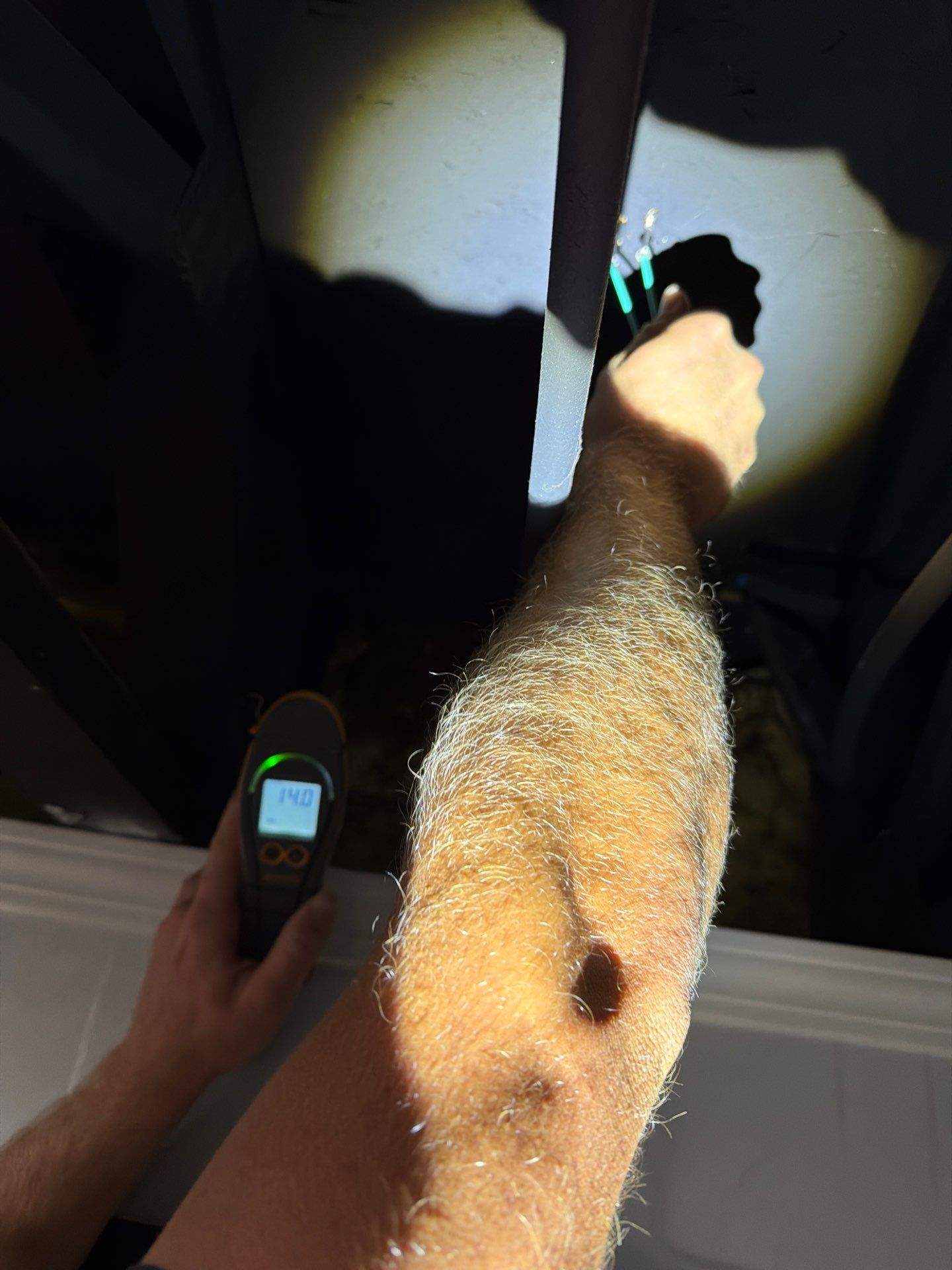
Drying took four days with two air movers and a low grain refrigerant dehumidifier. Moisture readings on the bottom plate started at 28 percent and we did not demobilize until they hit 14 percent. For homeowners curious about how we map wet areas before cutting, the post on moisture mapping with thermal imaging covers the same workflow we used here.
One detail worth noting on this job: the sectional couch had been pushed against the wall for almost a year. The fabric backing on the couch wicked moisture upward and held it against the drywall, which is why the visible damage looked worse than the crack alone would suggest. I tell homeowners in Augusta to pull furniture six inches off basement walls during wet seasons. It is a small habit that buys you early warning time before water shows up in the middle of the floor.
Job 2: Cove joint seepage after three day rain event
Older block foundation on the north side of Augusta. Water was not coming through a single crack, it was weeping along the entire cove joint where the wall meets the slab. Classic hydrostatic pressure from a saturated water table. The homeowner thought one crack had failed. Actually, the footing drain was likely clogged or absent.
Decision: this is a basement flooding pattern, not a single point intrusion. I walked them through the difference and pointed them at our basement flooding service scope because the dry out plus the recommendation for an interior drain tile system was beyond a simple crack repair. We dried the space, removed eighteen inches of drywall and the bottom row of fiberglass insulation, and treated the framing with an EPA registered antimicrobial. The long term fix, a sump pit and perimeter drain, was someone else's contract. We were straight about that.
I also pulled a moisture reading on the slab itself with a non penetrating meter and found elevated readings six feet inward from the wall. That tells you the slab is acting like a sponge from below, not just along the edge. In cases like this, sealing the visible crack would have done nothing. The pressure simply finds the next path. Augusta Water Restoration has walked enough block foundations in this part of town to recognize the pattern within the first few minutes.
Job 4: Crack water that came back dirty
This one mattered. Water entering through a foundation crack near a failed sewer lateral tested as Category 2 with elevated bacterial indicators. We treated it as such. Affected porous materials came out, including a section of carpet pad that a less experienced crew might have tried to dry. Per IICRC S500, that is not optional. The homeowner appreciated the explanation more than the demo. People generally do, once they understand why.
The lateral itself was cracked about eight feet from the foundation wall, under the front yard. Groundwater was flowing along the outside of the pipe, picking up contaminants, and then following the path of least resistance through the foundation crack. The plumber confirmed the break with a camera scope the next morning. Without that scope, the homeowner might have spent thousands on crack injection that would have failed again within a month. The right sequence matters: identify the source, address the source, then restore the interior.
What I check in the first ten minutes on every call
- Crack type and orientation: vertical, horizontal, stair step in block, or diagonal at a corner
- Wall material: poured concrete, CMU block, or stone
- Water clarity and odor, with a quick category assessment per S500
- Moisture readings on bottom plate, drywall, and any contact flooring
- Efflorescence patterns showing prior events the homeowner may not know about
- Exterior grade, downspout discharge, and window well condition before I leave
- Pipe and conduit penetrations within four feet of the wet area
- Whether the situation calls for restoration only, or a foundation contractor referral too
Job 5: Pipe penetration leak that looked structural
Last one worth logging. Water was beading at the base of the wall near the electrical service entrance. The homeowner assumed the foundation had cracked at the penetration. In reality, the exterior caulk seal around the conduit had degraded after about fifteen years of freeze thaw cycles. Water tracked along the conduit, entered the wall cavity, and pooled at the bottom plate.
Decision: dry the cavity, dehumidify for two days, and recommend a hydraulic cement patch on the exterior side plus fresh urethane sealant around the conduit. No foundation work needed. I mention this one because pipe and conduit penetrations get blamed on foundations all the time in Augusta homes built before 1995. Always check the seals before assuming the concrete failed.
Job 3: Window well overflow disguised as a crack
Customer was certain it was a foundation crack. Water stain ran down the wall in a clean vertical line. When I opened the access panel, the actual culprit was a window well packed with mulch and oak leaves that had backed up during a heavy storm. The water found a gap in the window frame, ran behind the drywall, and exited through what looked like a wall crack at the floor. Related notes live in the post on window well water intrusion in heavy rain.
Decision: dry the wall cavity, cleared the well, recommended a clear polycarbonate cover. Total cost was a fraction of a foundation repair because we did not chase the wrong problem.