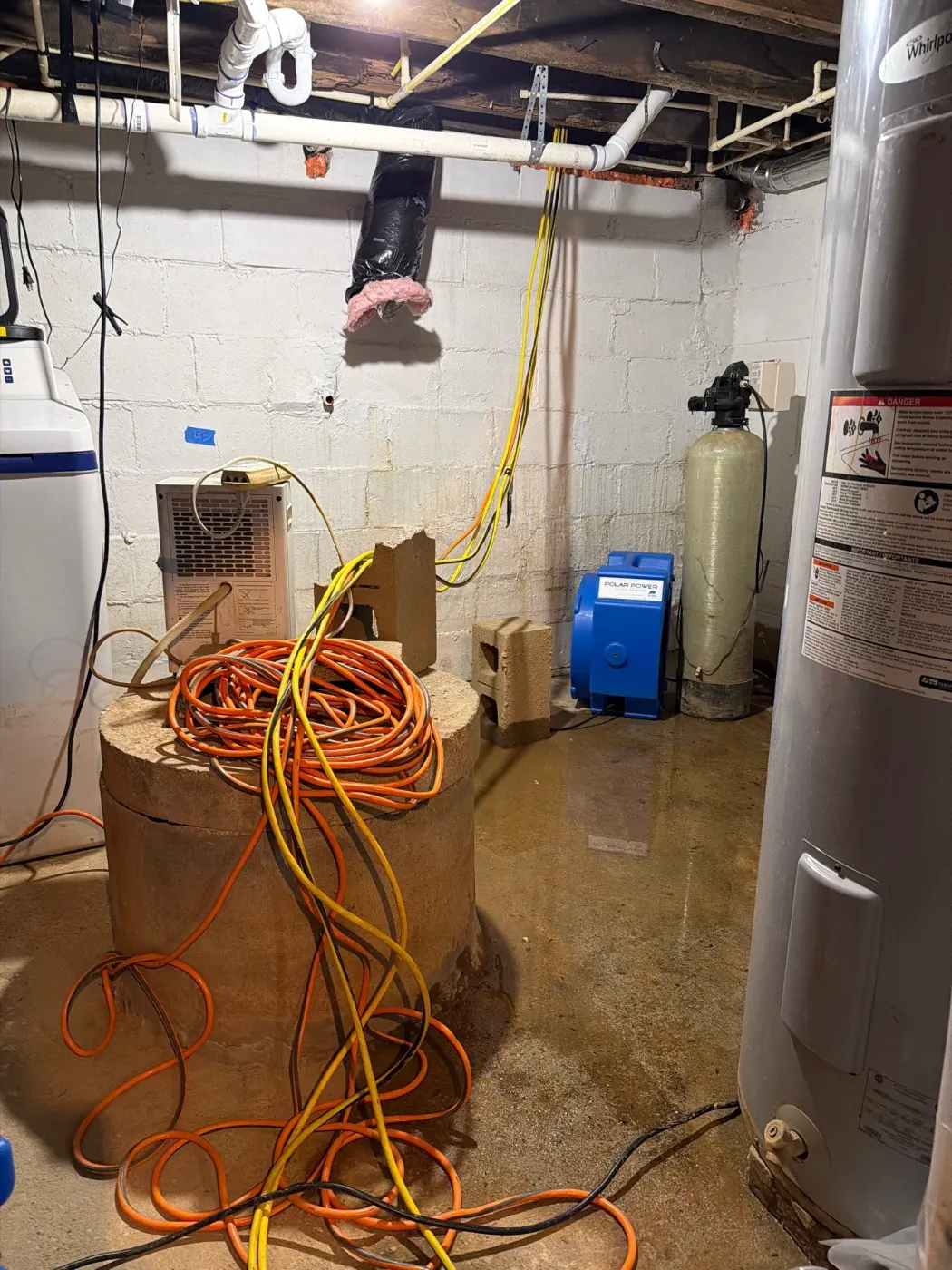
Wet Drywall in Your Augusta Home?
When a supply line lets go at 2 AM or Crooked Creek pushes water into your basement, Augusta Water Restoration delivers fast, around the clock emergency water damage restoration in Augusta. Our IICRC certified crews handle full mitigation through reconstruction and coordinate directly with your insurance carrier.
When we can't answer right away, we call you back within 15 minutes.


Augusta Water Restoration delivers emergency water damage cleanup across Augusta and surrounding IN communities: same day water removal, verified structural drying, sewage and storm cleanup, and insurance claim documentation. Crews answer 24/7 at (317) 342-7736.
- Services: water damage restoration, basement flooding, sewage cleanup, storm damage
- Service area: Augusta, Marion County, IN and surrounding areas
- Response time: Same day for Augusta inquiries; 24/7 emergency service available
- Licensed and insured (License #RC21100059)
- Serving Augusta, IN since 2018
Schedule Your Free Damage Assessment
Our Augusta inspection is room by room, slow enough to find what hides behind finishes. We pull non penetrating meter readings on walls at multiple heights, check baseboards and trim, lift carpet corners to test pad and tack strip, and look behind cabinets, under sinks, and around water heaters and washing machines. Subfloors get probed with penetrating meters, insulation gets pulled in suspect cavities, and basement perimeters and slab joints get walked end to end. A thermal imaging camera maps temperature differentials that signal hidden moisture, while a hygrometer captures ambient humidity and dew point. This is where Augusta restoration jobs are won or lost, because the moisture missed at intake is the moisture feeding mold colonization 30 days later.
I agree to be contacted by Augusta Water Restoration regarding my inquiry.
Hidden leaks do slow damage across Marion County. A failed washing machine hose, a pinhole in a supply line, a slab leak under the kitchen: by the time Augusta homeowners see the stain, moisture has been spreading behind the walls for weeks. Professional moisture detection finds what eyes miss.
The utility shutoffs come first. Electrical hazards, gas appliances near water, and compromised systems get assessed before anyone wades in. Safe Augusta water damage response protects the family and the crew before it protects the drywall.
24/7 means answered, not answered eventually. Water emergencies across Augusta and Marion County reach a live person who can dispatch, day, night, weekend, or holiday. The clock that matters is yours, and it started when the water did.
Payment Options That Work for You
A water loss is rarely a planned expense. Our lender partners offer terms that fit a range of budgets so you can move forward while insurance settles. Ask Augusta Water Restoration for current rates.
Pay for your project at a later time, but lock in today's pricing. Ideal for homeowners waiting on insurance settlements.
- No payments for 12 months
- No interest if paid in full
- Lock in current pricing today
Divide your project cost equally across 12 months with zero interest. Most homeowners choose this option for predictable budgeting.
- Equal monthly payments
- 0% interest for 12 months
- Simple, predictable budgeting
Spread your investment over up to 20 years with fixed equal payments. The right choice for larger projects or homeowners who prefer lower monthly amounts.
- Up to 20-year terms available
- Fixed equal payments
- Ideal for larger restoration projects
Subject to credit approval. Ask your project lead for current terms and promotions.
Augusta Properties, Start to Finish
Whether it's a burst pipe or a storm, the work starts with stopping the water and getting the house dry.
Water Damage Restoration in Augusta
Full scope residential water damage response in Augusta, from emergency extraction and structural drying through reconstruction. Covers supply line breaks, appliance failures, and storm driven intrusion.
Learn moreBasement Flooding in Augusta
Pumping, extraction, dehumidification, and disinfection for flooded Augusta basements, whether the source is groundwater, sewer surcharge, sump pump failure, or surface runoff.
Learn moreSewage Cleanup in Augusta
Serving Augusta: category 3 sewage backup cleanup with full containment, contaminated material removal, antimicrobial treatment, and verified decontamination per IICRC S500 protocols.
Learn moreStorm Damage in Augusta
In Augusta, water intrusion response from severe Indiana storms, including extraction, drying, and reconstruction for damage caused by wind driven rain, hail, and flooding.
Learn moreCommercial Water Restoration in Augusta
Water damage restoration for Augusta commercial properties, scoped to keep tenants operating where possible and documented to commercial insurance standards.
Learn moreCommercial Flood Damage Cleanup in Augusta
For Augusta addresses, large loss flood response for commercial buildings, including extraction, structural drying, contents handling, and coordination with property managers and adjusters.
Learn moreCommercial Sewage Cleanup in Augusta
Serving Augusta: sewage and Category 3 water cleanup for commercial properties, with containment, biohazard handling, and post remediation verification.
Learn moreCommercial Mold Remediation in Augusta
For Augusta addresses, mold remediation for commercial buildings performed under IICRC S520, including containment, removal, antimicrobial treatment, and clearance verification when warranted.
Learn moreCommercial Storm Damage in Augusta
In Augusta, storm driven water damage cleanup and reconstruction for commercial properties, scoped and documented for business interruption claims.
Learn more
Local Expertise, Real Results
Restoration is the only work we do, and the methodology shows up on every Augusta job site.
When something goes wrong with water in your Augusta home, the first hour determines the rest of the project. Augusta Water Restoration typically dispatches a licensed crew Within 2 hours of your call on active water emergencies, with the crew letting you know on the call if the dispatch will take longer, documents the loss for your insurance carrier on arrival, and starts extraction on the same visit. Augusta and surrounding Marion County since 2018.
Augusta Water Restoration serves Augusta homeowners across Pike Township and the broader Marion County service area, responding throughout the 46260 and 46268 ZIPs and into neighboring areas like Crooked Creek, College Park, and Trader's Point. Restoration is the only thing our crews do, and the experience shows up in how we read a wet wall cavity, scope a Category 3 loss, or stage drying equipment in a finished basement. Every technician on a job site is a experienced technicians on a licensed and insured crew, always our crew. We carry IICRC certification, full general liability coverage, and the kind of methodical approach Augusta professional families expect when their home is in trouble.
Our work follows the IICRC S500 standard for water damage restoration, with S520 protocols guiding any mold remediation that follows. On arrival in Augusta, we start with a moisture assessment using thermal imaging and penetrating meters to map the actual footprint of the loss, not just the visible wet spots. Controlled extraction comes next, then structural drying with monitored air movement and dehumidification sized to the affected square footage. When contamination or biological growth is present, we apply EPA-registered antimicrobials and verify conditions before any reconstruction begins. Materials are confirmed dry against unaffected baselines before drywall, flooring, or trim goes back in, so the repair holds.
Our Promise
Three things you can count on from Augusta Water Restoration. We respond quickly to Augusta water emergencies day or night, with equipment loaded and a certified lead tech dispatched on the first call. Our technicians are IICRC certified and trained to the S500 standard, so the work meets the methodology your insurance carrier expects to see documented. And every job starts with a free on site inspection, no obligation, with full insurance coordination if you have an active claim.
Four Reasons Augusta Trusts Us
IICRC certified crews, written moisture documentation, and pricing built from a free on site assessment, not a phone guess. Augusta homeowners get the full picture before work begins.
Around the Clock Emergency Response
Water damage in Augusta does not wait for business hours, and neither do we. Our 24/7 emergency line connects you to dispatch any time, with extraction equipment, dehumidifiers, and air movers staged on the truck before the crew rolls. Fast mitigation limits how far water travels through subfloors and wall cavities.
IICRC Certified to S500
Our technicians are trained to the IICRC S500 standard, the published methodology for professional water damage restoration. In practice, that means Category determination is documented, drying goals are tied to measurable moisture content, and the structure is verified dry before reconstruction. Insurance adjusters recognize the standard, which keeps your claim moving.
Mitigation Through Rebuild
One crew handles your Augusta loss from the first extraction pass through final paint and trim. Drywall, flooring, cabinetry, and finish work are all in scope, so you are not chasing a second general contractor after dry out. That continuity shortens the timeline and keeps accountability in one place.
Insurance Coordination Done Right
We work with your insurance carrier, not around them. Every affected area is photographed and videoed before mitigation, meter readings are logged in a written moisture map, and the scope is built to match coverage language. Most major insurance carriers accept our documentation without pushback.
Real Jobs. Real Results.
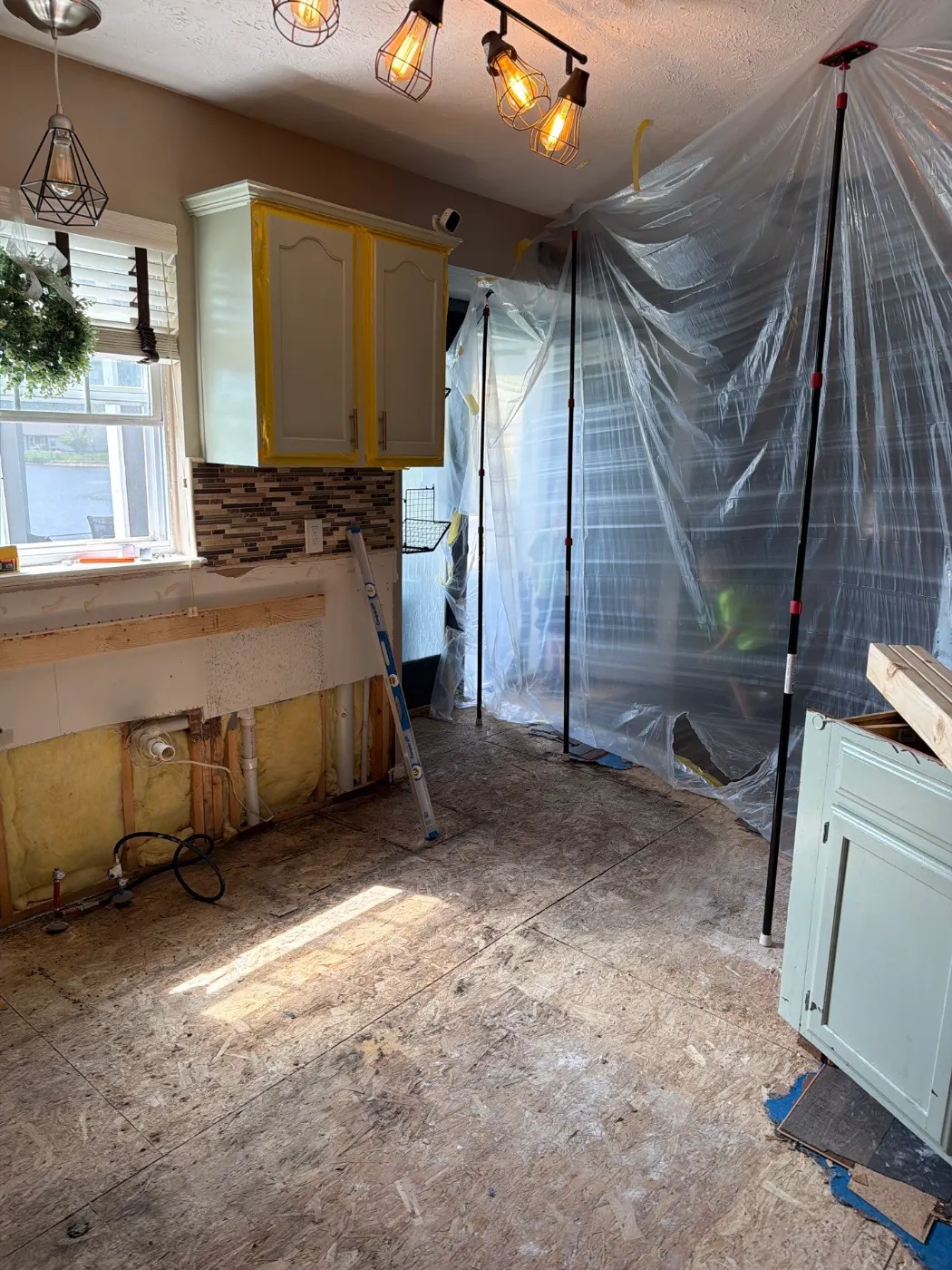
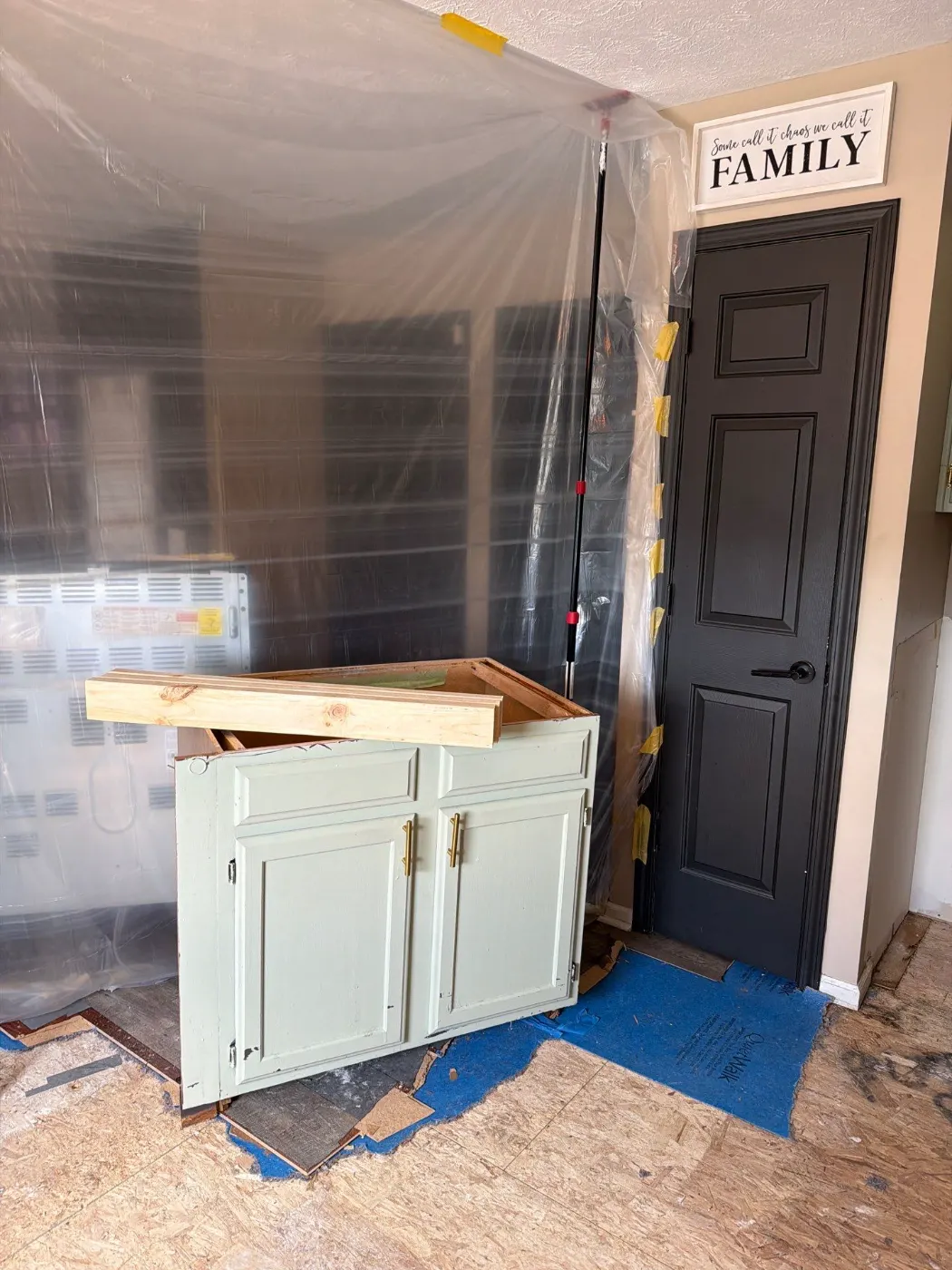
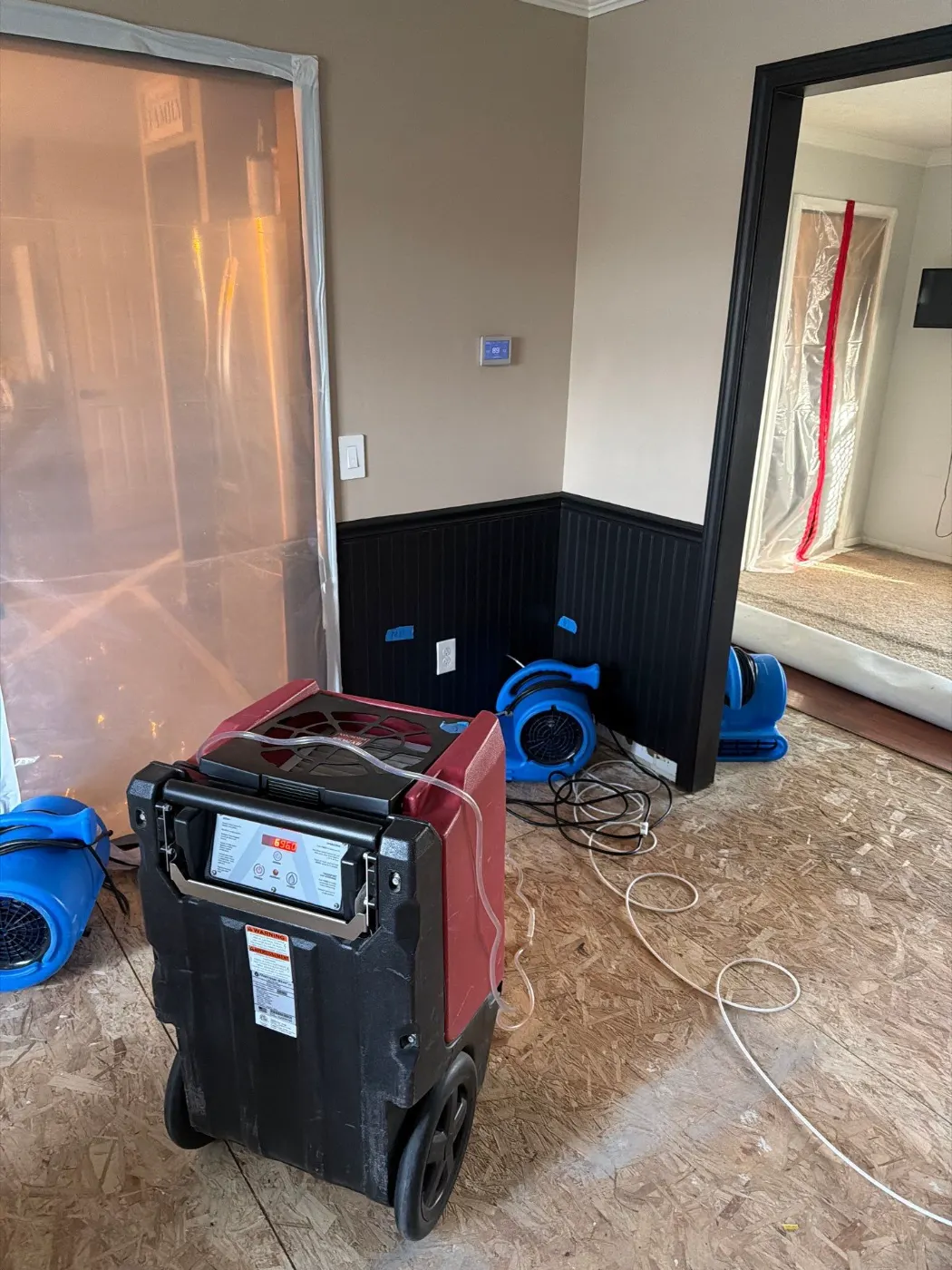
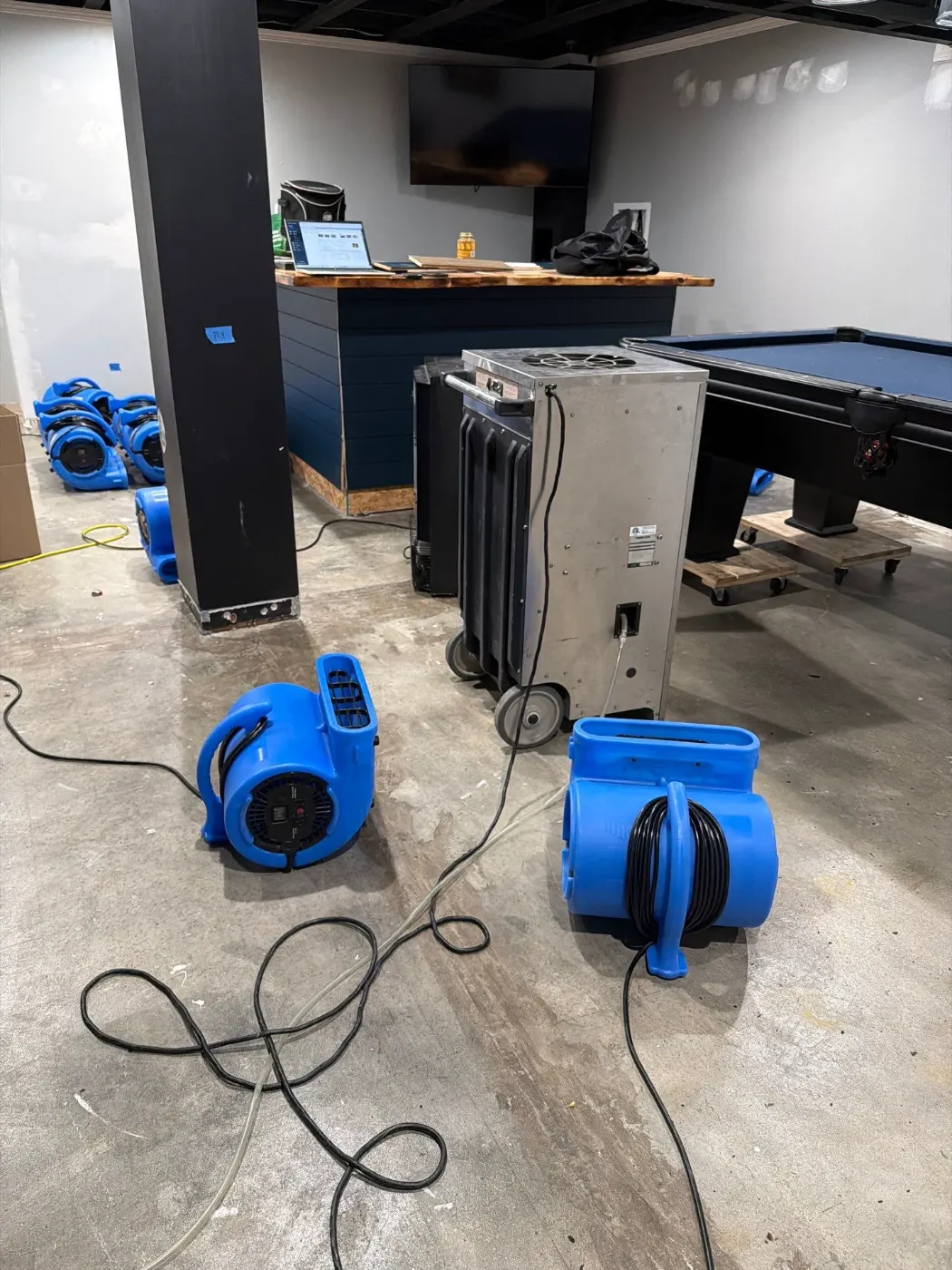
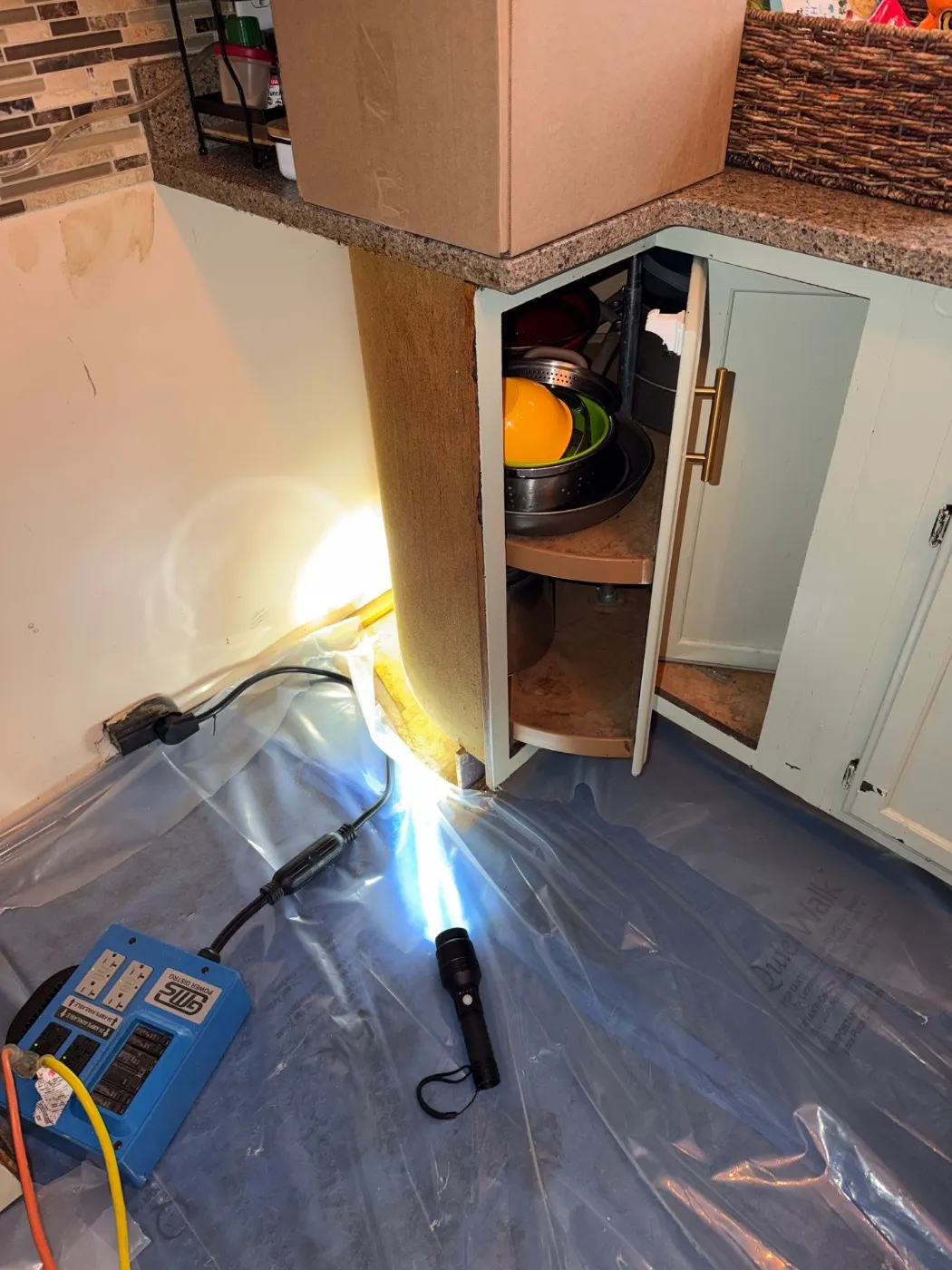
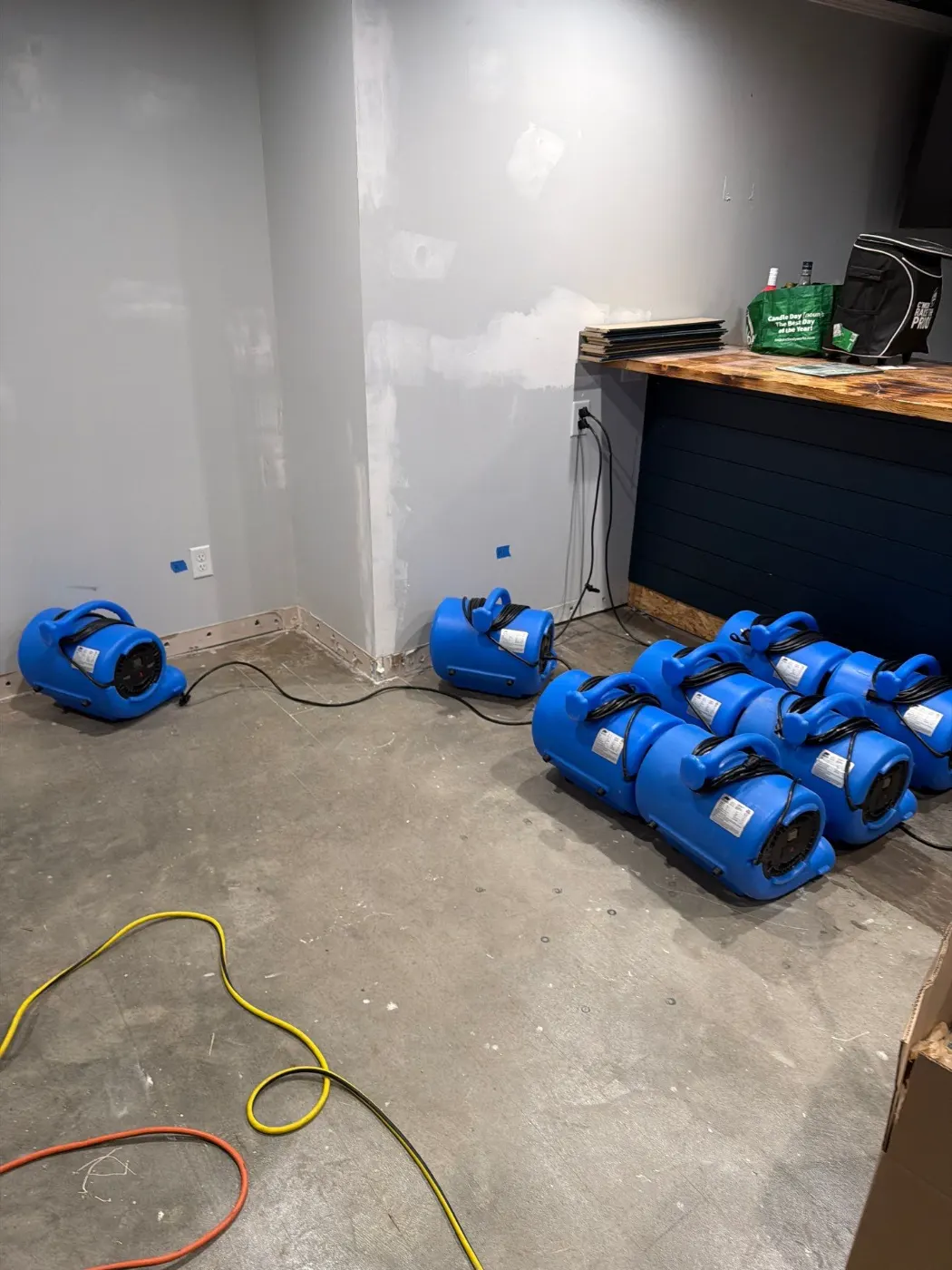
Recent water damage restoration projects from Augusta and across Marion County, including basement extraction, Category 3 sewage cleanup, and full reconstruction after burst pipes.
Our Process in Augusta Water Emergencies
Phase one is assessment. When we arrive at your Augusta property, a certified lead tech walks the loss with you, locates the source (broken copper supply line, dishwasher hose, sewer backup, storm intrusion through a window well), and pulls thermal images and meter readings to map the real footprint. Water gets classified per IICRC S500 as Category 1, 2, or 3 based on source and contamination. Scope is written before a single air mover goes down. This intake typically takes one to two hours and sets the foundation for everything that follows.
Phase two is documentation and insurance coordination. Before mitigation starts, we photograph and video every affected room, log meter readings into a written moisture map, and inventory damaged contents. We contact your adjuster directly, walk them through the scope, and justify mitigation per industry standard so coverage decisions are made on facts, not guesses. Most Augusta homeowners never have to assemble this paperwork themselves, we handle the carrier communication while you focus on your family. Daily updates keep you informed without burying you in jargon.
Phase three is drying and reconstruction. Air movers and dehumidifiers are placed using structural drying calculations matched to the affected square footage and material types. We return daily, log moisture content, and adjust equipment until readings match unaffected baselines. Controlled demolition happens only where materials cannot be dried in place. Then reconstruction begins: drywall hung and finished, insulation replaced, flooring installed, trim and paint completed. Your Augusta home leaves our scope looking the way it did before the loss, not halfway repaired with a list of follow up contractors.
Rapid Augusta Dispatch
Call comes in, dispatch goes out. The truck rolls with commercial extraction equipment, dehumidifiers, air movers, and meters already loaded, and a certified lead technician runs the crew on site. We move quickly because every hour without extraction expands the affected footprint.
Category Determination
Per IICRC S500, water is classified Category 1 (clean supply line), Category 2 (gray water from appliances or toilet overflow), or Category 3 (sewage, floodwater, long standing groundwater). Meter readings are logged, a written assessment is produced, and the scope follows from that classification, not guesswork.
Insurance Partnership
We work directly with your insurance carrier and adjuster, documenting the loss with photos, video, and a written moisture map. Scope language is matched to coverage and justified per industry standard, so you avoid surprise invoices and denied line items.
Verified Dry Standard
Drying continues until moisture content in affected materials matches unaffected baselines. Daily monitoring with logged meter readings confirms progress. Reconstruction does not start until the structure is verified dry, which prevents trapped moisture from feeding mold weeks later.
Most Common Causes of Water Damage in Augusta Homes
Washing Machine Hose Burst
The supply hoses behind a washer sit under house pressure every hour of the day, whether the machine is running or not. When one splits it does not stop until somebody reaches the valves, and a second floor laundry sends that water through the ceiling below.
Sewer Line Backups
Sewer backups carry biological hazards that require IICRC S500 Category 3 protocols. Augusta homes with backup history should consider a backflow valve to prevent future events.
Frozen Pipe in an Exterior Wall
Any supply line run in an outside wall is one cold night from trouble. The insulation ends up behind the pipe instead of in front of it, the cavity drops below freezing, and the ice plug splits copper where nobody can see it.
Vacant Property Freeze
If an Augusta property is going to sit empty through winter, shut the water off at the main and drain the system, or keep the heat on and have somebody check it weekly. A remote temperature alarm costs very little next to what we usually get called for.
Window Well Overflow
A basement window well is a small pit that has to drain faster than the rain fills it. When the gravel silts in or the drain plugs, the well turns into a bucket and the water sits against the glass until it finds the frame.
Roof Leak Reaching the Ceiling
A ceiling that bulges is holding water above it, and standing under it to poke a hole is how people get hurt. We relieve it in a controlled way, extract what comes down, and pull the soaked insulation, because insulation that has been saturated does not dry in place.
How to Protect Your Augusta Home in the First Hour of a Water Leak
In the first hour, work through this list in order, starting with the water itself. Everything on it can be done with what you already have at home, and each step makes the drying easier once our crew arrives.
1. Close the main valve first
Find the main shutoff and close it all the way. A round handle turns clockwise, and a lever handle turns so it sits across the pipe. If the valve won't move, your water utility can usually shut off service at the meter.
2. Turn off power to wet rooms
Switch off the breakers for wet rooms only when you're standing somewhere dry and the panel is dry too. When the panel sits in a flooded basement, leave it alone and call your electric utility from upstairs.
3. Treat sewage water with care
Water from a sewer backup can carry bacteria, so avoid touching it with bare skin. Close the door to the affected room if you can, and keep everyone on a dry floor until the crew arrives with protective gear.
4. Save the paperwork
Deeds and family records are hard to replace, so move them to a dry room before anything else. Put them in a plastic bin or a sealed bag if the rest of the house is damp.
5. Pull up rugs and mats
Wet area rugs and bath mats hold water against the floor. Roll them up and move them to a garage or a dry room, and set any furniture that stays behind on foil squares to keep stains off the carpet.
6. Our crew takes the photos
Our crew takes the damage photos when we arrive, so you can spend the first hour on the steps on this list. We photograph each wet room before anything moves, and those pictures go into the photo report you keep.
7. Soak up clean water
If the water came from a supply line or the water heater, you can blot it with towels and mop the floor. A wet and dry shop vac works for clean water too. Leave any water from a sewer or a floor drain for the crew.
8. Have a few details ready
It helps to know roughly when the water started and whether it's clean water from a pipe or dirty water from a drain. If you're unsure about either one, the crew sorts it out on site.
The crew takes over from here, starting with photos and moisture readings, so call when you've done what you safely can.
Three Simple Steps
The work follows three steps, and the photo report keeps a record of each one.
One Call, Crew Moving
The goal on arrival is simple: stop it, then dry it. A single call starts the clock, and a crew is out the door within 2 hours. Every truck carries extraction, drying, and containment as standard kit.
The Assessment
The insurance file opens with photos taken before anything moved. Nothing is torn out that a meter did not condemn. A written scope follows the meters, not a guess.
The Rebuild
The job ends on numbers, not on looks, and most Augusta losses dry in 3 to 5 days. Rebuild starts only after the drying is signed off. We do not bill for equipment that is not running.
What the Photo Report Tells You About Water Damage in Augusta
Our photo report gives you a clear picture of the water damage in your home, taken by our crew and explained by us. It covers where the water came from and what we plan to do about it, and you keep it when the job is done.
The starting point
Every report opens with the starting point of the leak, photographed before anything is moved. Water that came from outside, like a window well or a storm, gets noted the same way, with photos of where it got in.
What a thermal camera shows
A thermal camera picks up the cooler surfaces that wet materials leave behind. When the crew uses one, the images go in the report next to the meter readings that confirm what the camera found.
Pictures you can keep
Every photo in the report comes from our crew, taken on site during each visit. You keep a copy of the full set, which is handy if you sell the house later and a buyer asks about the water damage.
What has to be removed
When a material is too wet to save, the report says so and shows the readings and photos that back it up. You'll know the reason for every cut before the crew makes it.
The drying log
The report keeps a running log of the drying, with the readings from each visit and notes on the equipment in each room. It's the easiest way to see how close your home is to dry.
A conversation in plain words
The report comes with an explanation. We go over the photos and readings with you and answer questions as they come up, so the moisture numbers make sense to you.
A record that's yours
Keep the report with your home records. We document damage with a photo report and walk you through what we found, so you can decide with your insurance company. Your policy will say what's covered, so read it before you call them.
Call our dispatch line, and the crew will begin your photo report as soon as they reach your Augusta home.
What to Ask Before You Hire in Augusta
Use these questions with any water damage company you call in Augusta.
Can I see an itemized estimate?
Ask for every line item in writing. Many insurers price water losses in Xactimate, so an estimate in that format is easier for an adjuster to review.
Does my policy require a certain company?
Ask your adjuster before you sign anything, and read the work authorization so you know what you're agreeing to.
What happens if you find mold?
Ask how mold behind walls or under floors gets handled, and whether that work is priced apart from the drying.
Who handles repairs after drying?
Ask who replaces drywall, flooring, paint and trim once the structure is dry, and whether one company can do both stages.
Who will be working in my home?
Ask whether the crew works for the company you called or for a subcontractor, and who's in charge on site each day.
How will you show me it's dry?
Ask for moisture readings on the first visit and the last one, so you can see the numbers reach dry standard.
Indiana Weather Drives Restoration Calls Year Round
Indiana weather drives a steady rhythm of water damage calls across Augusta. Winter polar vortex snaps burst supply lines in garage walls and crawlspaces, spring rains saturate Pike Township soils and back up sanitary lines into finished basements, and summer thunderstorms push wind driven rain through compromised window and door assemblies.
Winter Pipe Bursts
Indiana polar vortex cold snaps drive supply line failures across Augusta, especially at exterior hose bibs, garage wall runs, and crawlspace plumbing near the Michigan Road corridor. A burst half inch line at 2 AM can release hundreds of gallons before the main valve is closed. We extract, dry, and rebuild the affected wall and floor systems.
Spring Saturation Flooding
Spring rains saturate Pike Township soils and push groundwater against foundation walls. With Crooked Creek prone to sewer surcharging during moderate rainfall, finished basements across Augusta take in water through cove joints, window wells, and floor drains. We pump, extract, dehumidify, and disinfect when contamination is involved.
Summer Humidity and Mold
Indiana summers run hot and humid, and water losses that are not dried to standard turn into mold problems within weeks. Unconditioned spaces, behind cabinet voids, and basement perimeters are where colonization shows up first. When we are called in, S520 protocols guide containment, removal, and post remediation verification.
Severe Thunderstorms
Summer storm cells sweep through Marion County with wind, hail, and intense rainfall that overwhelms gutters and grading. Water finds its way in through compromised windows, door thresholds, and foundation cracks across Augusta. Our crews extract standing water, dry the structure, and document storm driven intrusion for your claim.
Neighborhood Coverage in Augusta
Open a neighborhood name for a short read on its homes, including the basements and the age of the plumbing.
Where we respond near Augusta
Our dispatch line runs 24/7 for Augusta and the communities closest to it.
What Makes Augusta Water Losses Different
The housing stock, the weather, and the failure points we see here.
About Augusta Homes
The Augusta neighborhood of Indianapolis is dominated by homes built between 1970 and 1999, with a secondary wave constructed between 1940 and 1969 and newer subdivisions added in the early 2000s. Homes from the 1940s,1969 era likely retain galvanized or early copper plumbing, while those built in the 1970s,1990s are predominantly copper supply lines, and early 2000s construction may include PEX. Augusta's housing stock is a mixture of ranch style and New Traditional single family homes, primarily medium to large three- and four bedroom structures that are owner occupied. Listing descriptions reference finished and unfinished basements, suggesting basement construction is present across the neighborhood, which elevates sump pump dependency and groundwater intrusion risk.
Where We Work in Augusta
We cover homeowners across Augusta near Eagle Creek Park, Northwestway Park, Northwestway Aquatic Center, Michigan Road corridor (71st Street,76th Street), Ascension St. Vincent Hospital, Crooked Creek Shopping Center, New Augusta Conservation District, 76th Street and Michigan Road intersection.
Surrounding Areas We Serve
Our crew also covers Crooked Creek, Snacks-Guion Creek, College Park, St. Vincent-Greenbriar, Park 100, Trader's Point.
Recent Weather Patterns
Augusta sits just south of Crooked Creek, an urban stream documented by Indiana University Indianapolis researchers as prone to flooding, sewer surcharging, and the discharge of raw sewage during moderate rainfalls, conditions that regularly push water into basements and crawlspaces across Pike Township. Indiana as a whole has experienced repeated major flood and severe ice storm events, including back to back disasters in 2004,2005 (ice storm and flooding north of Indianapolis) and six major floods from 2008,2009, establishing a strong regional pattern of freeze thaw pipe bursts and storm driven water intrusion.
What Our Crew Sees in Augusta
Augusta is located just south of Crooked Creek, an urbanized stream that the IU Indianapolis Center for Earth and Environmental Science identifies as degraded by development and subject to sewer surcharging during moderate rain events, meaning backed up storm and sanitary lines are a recurring basement and crawlspace water source for nearby homes. The neighborhood's dominant build era of 1970,1999 means a significant share of homes carry aging copper supply lines now approaching or past their 40,50 year service life, making pinhole leaks and joint failures a common interior water damage driver. Indiana's pronounced freeze thaw cycle and the area's proximity to the I-465/Michigan Road corridor, where cold air intrudes during polar vortex events, makes exterior hose bib and garage wall plumbing runs particularly vulnerable to burst pipe incidents each winter.
The Augusta Area
Augusta is an upper middle income suburban neighborhood in Pike Township, Indianapolis (ZIP codes 46260/46268), with a median real estate price around $275,000,$280,000 and a household profile skewed toward owner occupied, executive and professional families. NeighborhoodScout places its income higher than 67.7% of U.S. neighborhoods, with 33.6% of working residents employed in executive, management, and professional roles.
The Work Behind a Dry Out in Augusta
What we bring, what we seal off, and what we put back.
Emergency response in Augusta starts with what is already on the truck: commercial water extraction equipment sized for standing water removal, commercial dehumidifiers matched to the affected square footage, professional air movers for surface evaporation, thermal imaging cameras, and penetrating and non penetrating moisture meters. Extraction begins promptly on site, with structural drying equipment set the same day so evaporation starts working immediately. Work zones are contained with plastic sheeting where needed, unaffected areas are protected, and walkways are kept clear. You get a clear daily briefing on what is dry, what is still in process, and what comes next. This phase covers most Category 1 and Category 2 losses (clean supply line breaks, dishwasher and washing machine overflows, toilet overflows without solids) where rapid mitigation prevents the loss from escalating.
Specialized containment kicks in when Category 3 water is involved (sewage backup from sanitary line surcharging, floodwater carrying outdoor contaminants, long stagnant water with biological growth) or when mold remediation under IICRC S520 is required. We build 6-mil plastic barriers floor to ceiling around the work area, seal entry points, and run negative air machines that pull contained air through HEPA filtration before exhausting outside the zone. Technicians work in full PPE: Tyvek suits, N95 or P100 respirators per S520, nitrile gloves, eye protection. Contaminated porous materials are cut, bagged, and disposed of per protocol, antimicrobial is applied to remaining structure, and post remediation verification with air sampling is performed when warranted. This is the phase where IICRC certification matters most, because shortcuts here become long term respiratory and structural problems.
Reconstruction is where most restoration jobs stall, because most companies hand the home off to a separate general contractor after dry out. We do not do that. The same crew that performed extraction and drying handles the rebuild: drywall hung, taped, mudded, sanded, primed, and painted; flooring replaced (carpet and pad, vinyl plank, hardwood refinish, tile reset); trim and baseboards reinstalled or replaced; cabinetry repaired or replaced; doors rehung; electrical and plumbing finish work coordinated with licensed trades. You have one project manager to call, one schedule to track, and one final invoice at the end. That continuity matters in Augusta, where finished basements, custom trim work, and engineered flooring require a crew that knows what they removed and what needs to go back.
Living at Home During a Dry Out in Augusta
The drying stage is the part of the job you live with, since the air movers and dehumidifiers stay in your home until the readings say the materials are dry. A few simple habits keep the drying on track and the house comfortable.
Expect steady noise
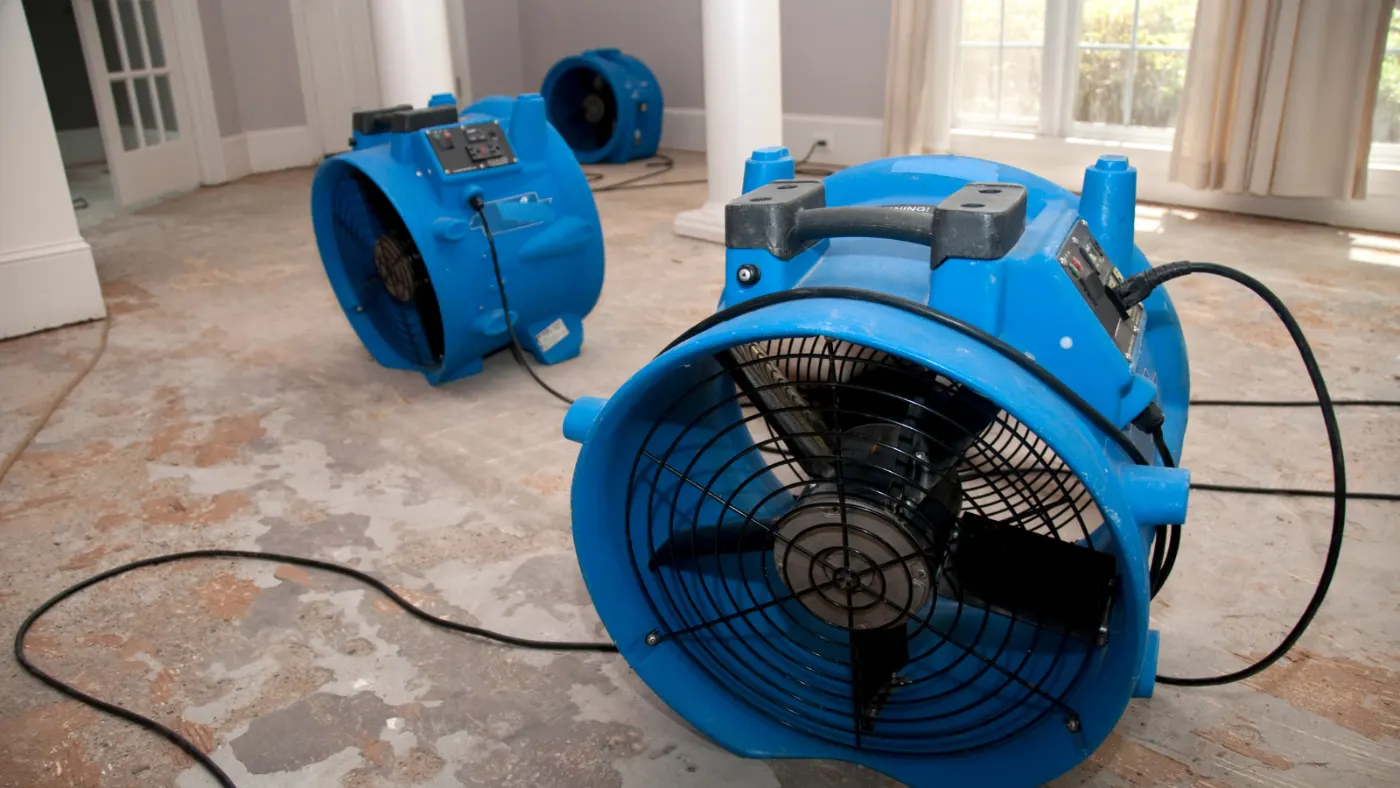
Air movers sound like strong box fans, and dehumidifiers add a low hum. A closed door between a bedroom and the equipment helps at night, and the crew can sometimes angle a unit away from a bedroom wall if the noise carries.
Leave it where the crew set it
Each air mover is aimed at a specific wall or section of floor. Leave the units where they are and keep them running overnight. If one needs to move, call us and the crew will reposition it.
The thermostat setting
Drying moves faster in a warm room, so the crew may ask you to keep the heat at a normal setting even in mild weather. Ask the crew before you turn the heat or the air conditioning way down.
The equipment uses a lot of power
Drying equipment draws a steady load, so the crew spreads it across different circuits. If a breaker trips, reset it once, and call us if it trips again so the crew can move a unit.
Plastic walls stay up
If the crew hangs plastic sheeting to close off part of a room, it's there to keep dust and moisture contained. Leave the zipper doors closed, and keep curious pets from scratching at the plastic.
Tell us what you notice
You live in the house, so you'll notice changes between visits, like a new stain or a smell that wasn't there before. Mention them on the next visit, or call us if something seems wrong.
Keeping moisture down
EPA puts it this way: the key to mold control is moisture control. In practice that means drying your home quickly and keeping the humidity down once the equipment is gone.
Finishing the dry out
Drying wraps up room by room, so some units may leave before others. When the last readings come back dry, the crew removes the rest of the equipment and walks the house with you.
The crew will walk you through the setup on the first day, and you can call us with questions until the last unit leaves your Augusta home.
Water damage pricing in Augusta
Mitigation ranges calibrated to the Augusta market. Final pricing depends on water volume, materials affected, and IICRC Category.
Honest Answers to Augusta Water Damage Questions
Plain answers to what Augusta homeowners ask before a crew starts work.
Expert Augusta Restoration Crews Available Now
Water spreading right now in your Augusta home, or moisture you suspect is hiding behind a wall? Call our 24/7 emergency line for fast dispatch. The on site inspection is free with no obligation, and we coordinate directly with your insurance carrier from the first photo forward.